

Most businesses do not have a server problem. They have a timing problem.
The hardware refresh happens. Production workloads move. New equipment gets racked. Then the retired gear sits. Sometimes it sits in a server room corner. Sometimes it gets stacked in a storage cage. Sometimes it gets spread across branch offices in Plano, Irving, or Fort Worth until someone has time to deal with it.
That delay looks harmless. It usually is not.
By the time many DFW companies call us for a pickup, the hard part of the refresh is already over. What remains is the equipment that has been out of production for months, still holding drives, still taking up space, and still losing value. The mistake is assuming that old hardware keeps roughly the same disposition economics while it waits. It does not. Once equipment gets older, mixed, and harder to resell cleanly, the curve gets steeper.
This is the part of the refresh cycle that most IT teams, office managers, and operations leaders underestimate.
The Depreciation Curve Is Not What It Used To Be
For years, many businesses could treat server resale value as a slow fade. If equipment was reasonably current and still in decent condition, waiting another year did not always feel fatal.
That is not the environment most mid-market organizations are in now.
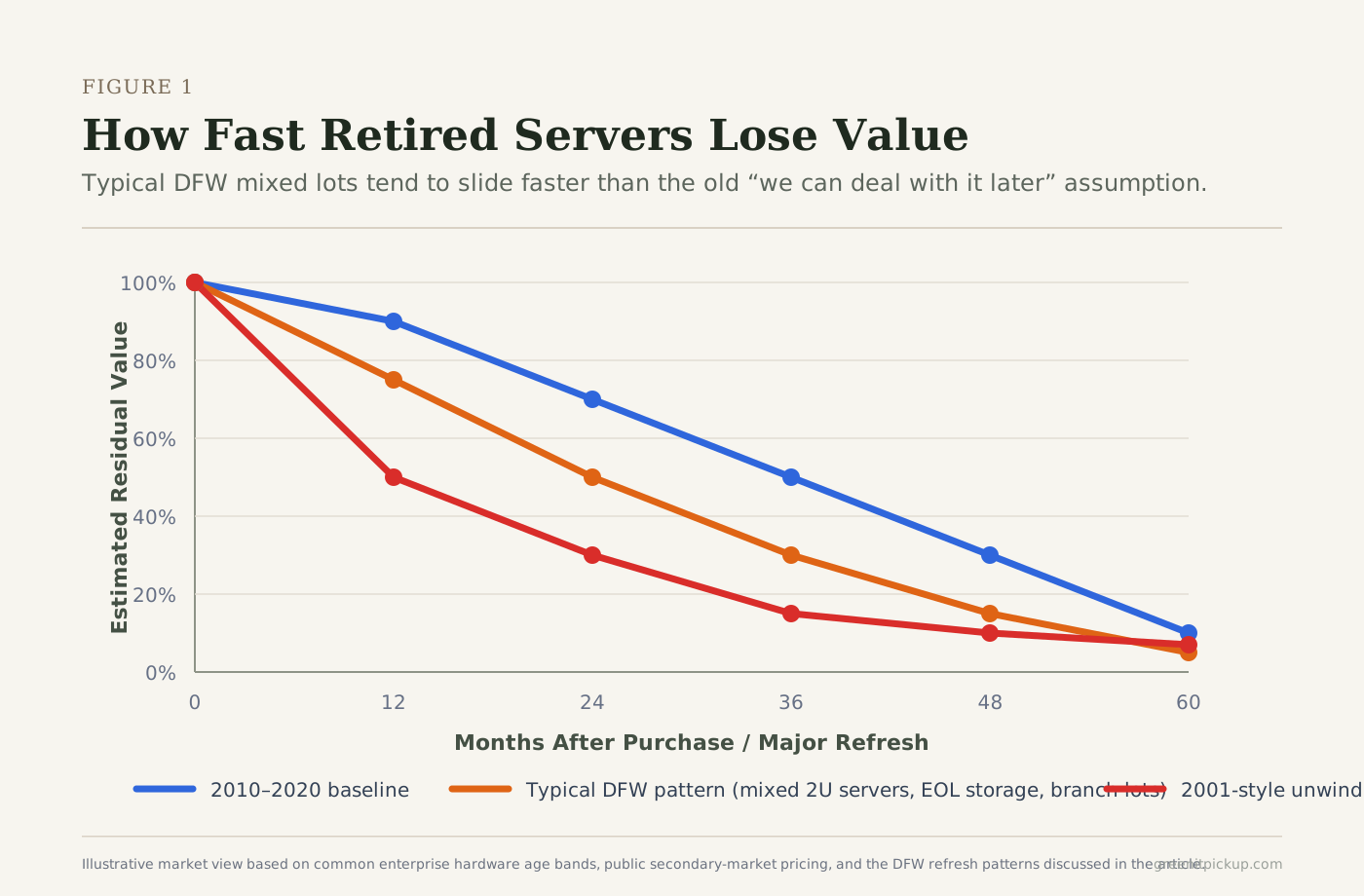
There are a few reasons the curve feels harsher today:
- Vendor support windows matter more. Once equipment is outside the sweet spot for supported parts, firmware, and buyer confidence, value can fall quickly.
- Mixed lots are harder to move than clean lots. A pallet of similar servers with documented specs is easier to place than a branch-office pile of mismatched servers, switches, laptops, and loose drives.
- Refresh cycles are speeding up in the parts of the market that influence resale expectations. DFW is still in the middle of a major infrastructure buildout, and that means more equipment is cycling through the secondary market faster than many buyers expected. We covered the broader backdrop in our 2026 DFW market report.
The important distinction is this: not every category drops at the same rate. Current-generation AI hardware and newer enterprise gear can behave very differently from mainstream retired business equipment. But most organizations calling a local pickup partner are not sitting on a pristine rack of current-generation accelerators. They are sitting on older servers, storage, networking, desktops, and drives that become less attractive every quarter.
What We See on the Ground in DFW
The pattern is familiar.
A business finishes an office refresh or infrastructure migration. The active project closes, but the retired hardware remains in limbo because nobody wants to make the wrong call on data handling, logistics, or documentation. That is especially common for small businesses, mid-size businesses, and local offices inside larger companies that do not have a standing national ITAD contract.
What starts as a short delay often turns into one of these:
- A storage room full of retired equipment that no one has inventoried in months.
- A server cage with gear pulled from production but still holding drives.
- Several branch-office piles that never get consolidated into a clean project.
- A move, lease event, or audit that suddenly turns “we should handle that later” into a compressed cleanup.
The business impact is usually broader than resale value alone. When equipment waits too long, you are stacking several problems on top of each other:
- The likely recovery value drops.
- The equipment becomes less reusable and more likely to end up as material recycling only.
- The documentation burden does not go away.
- The data risk stays in the building until the drives are actually handled.
That last point is the one many teams should take more seriously. NIST SP 800-88 Rev. 2 exists because media sanitization is a real discipline, not an afterthought. And the classic HHS copier case is still a useful warning: data-bearing equipment can leave a building in ordinary business processes and still create a major compliance problem later if nobody owned the disposition workflow.
Waiting Usually Costs More Than People Expect
The financial story is not only about what a broker might pay for equipment. It is about what you give up by waiting for the “perfect” moment.
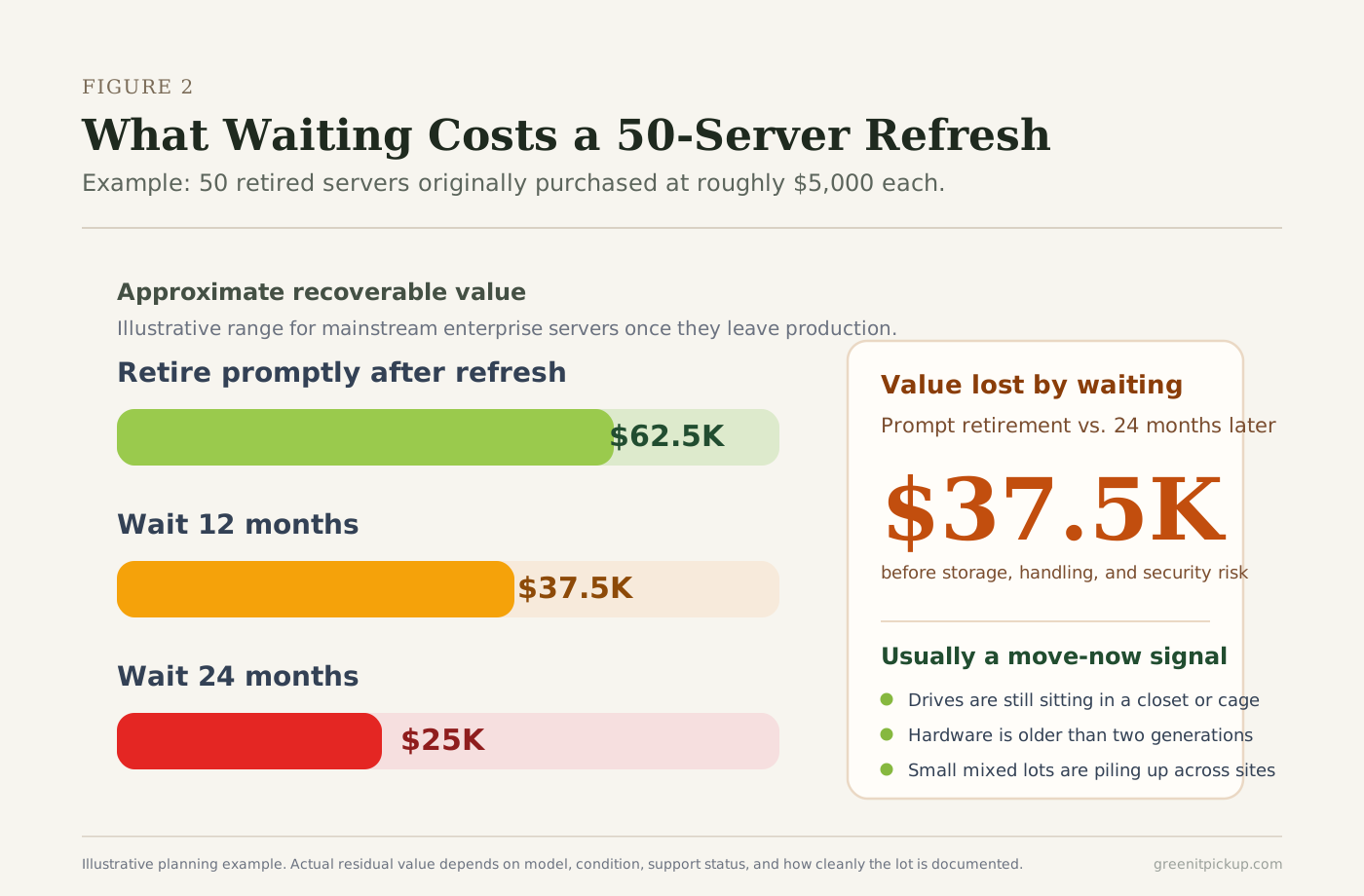
Three costs usually compound together:
1. Recoverable value drops
This is the obvious one. If equipment still has a realistic reuse market, waiting rarely improves the outcome. The longer it sits, the more likely it is that support windows tighten, buyer demand shifts, or the lot becomes harder to place because it is incomplete, undocumented, or mixed with unrelated equipment.
2. Security and compliance risk stays put
A retired server is not “handled” because it is unplugged. If it still contains drives, configs, credentials, or customer data, it is still part of your risk surface. That matters for healthcare, financial services, legal offices, government, and really any business that stores employee, client, or operational data.
If the equipment is going to need documented sanitization and chain-of-custody records anyway, delaying the project does not remove the requirement. It just leaves the requirement unresolved for longer.
3. Operations friction keeps accumulating
Every storage closet, branch office, or back-room pile eventually becomes someone’s problem:
- facilities needs the space
- IT gets asked what can be thrown away
- compliance wants to know what happened to the drives
- an office move forces rushed decisions
That is one reason we consistently tell customers that “do nothing for now” is usually the most expensive option over time. We broke down the broader economics in our ITAD cost comparison for DFW businesses, but the short version is simple: hidden costs compound even when no invoice has been issued yet.
The Equipment Categories That Usually Need Faster Decisions
There is no single rule for every environment, but a few categories tend to punish delay harder than others.
Older rack servers
Once a server is several generations old and out of the primary support sweet spot, it tends to fall into an awkward middle ground. It is not current enough to be especially attractive. It is not old enough to disappear into scrap without questions. And if it is still holding drives, the data handling requirements stay exactly the same.
If you are already planning a server recycling pickup, waiting another year usually does not improve the story.
Storage arrays and mixed infrastructure lots
Storage gear, networking, rails, miscellaneous accessories, branch-office hardware, and loose drives often create the least efficient projects when they sit too long. The more mixed the lot becomes, the less cleanly it tends to move through any downstream channel.
This is part of why a consolidated project often performs better than a slow trickle of forgotten equipment across multiple sites.
Branch-office leftovers
The DFW version of this problem is common: hardware piles up a little in Frisco, a little in Richardson, a little in Arlington, and a little at headquarters. No single pile feels urgent, so none of it gets addressed. Six months later, it is a bigger project with worse economics.
What Good Timing Looks Like
The best time to deal with retired equipment is usually while the refresh project is still fresh enough that these are all still true:
- you know what the equipment is
- you know which assets held drives
- the internal owner is still clear
- the logistics for pickup are easier to coordinate
- the documentation request is still simple instead of forensic
This does not mean every business needs a full-service national ITAD engagement. Many do not. For a large part of the market, the right answer is a local disposition workflow that includes pickup, data sanitization, certificates, and responsible downstream handling without turning a mid-market cleanup into a five-figure compliance project.
That is the gap local operators are useful for.
A Better Way to Think About the Decision
Instead of asking “Could we maybe get more for this later?” the better questions are:
- Is this equipment likely to be more attractive to downstream buyers in twelve months than it is now?
- Are we comfortable carrying the data, storage, and documentation burden for that extra time?
- Is the project getting easier by waiting, or are we just delaying the same work until it is more inconvenient?
For most businesses, the honest answer is that waiting does not improve the project. It just changes who absorbs the cost.
If your team is looking at retired servers, storage, or networking gear and trying to decide whether to keep sitting on it, the practical rule is this: once equipment is out of production and you know it will not be redeployed, move it through a real disposition workflow while the project is still clean.
Bottom Line
Most businesses do not lose on server-room cleanup because they picked the wrong week. They lose because they wait until the equipment is older, the lot is messier, the drives are still sitting there, and the people who understood the refresh are already back on other work.
If your organization is retiring servers, storage, or network gear in Dallas-Fort Worth, the goal is not to guess the perfect resale moment. The goal is to get the equipment out of limbo before value, documentation quality, and data control all get worse at the same time.
If that sounds familiar, contact us. We handle pickup, server recycling, data center decommissioning support, and documented data handling for businesses across the DFW service area.
Sources
Need IT Equipment Picked Up?
GreenIT Pickup provides free onsite pickup for qualifying B2B IT equipment loads across the Dallas-Fort Worth metroplex, so your team does not have to transport equipment to a drop-off.
Related Services
Related Articles
Data Center Decommission Prep Guide
From a DFW equipment pickup partner: what IT teams should have buttoned up before scheduling a data center decommission pickup — and what happens when they don't.
Industry InsightsData Sanitization vs. Physical Destruction
Compare media sanitization and physical destruction by security, reuse, documentation and cost—and learn how to choose a method that fits each device.
Industry InsightsThe IT Closet Problem: Hidden Costs
That closet full of old servers and laptops isn't just taking up space — it's costing you money, creating security liabilities, and losing value every month. Here's the math.