
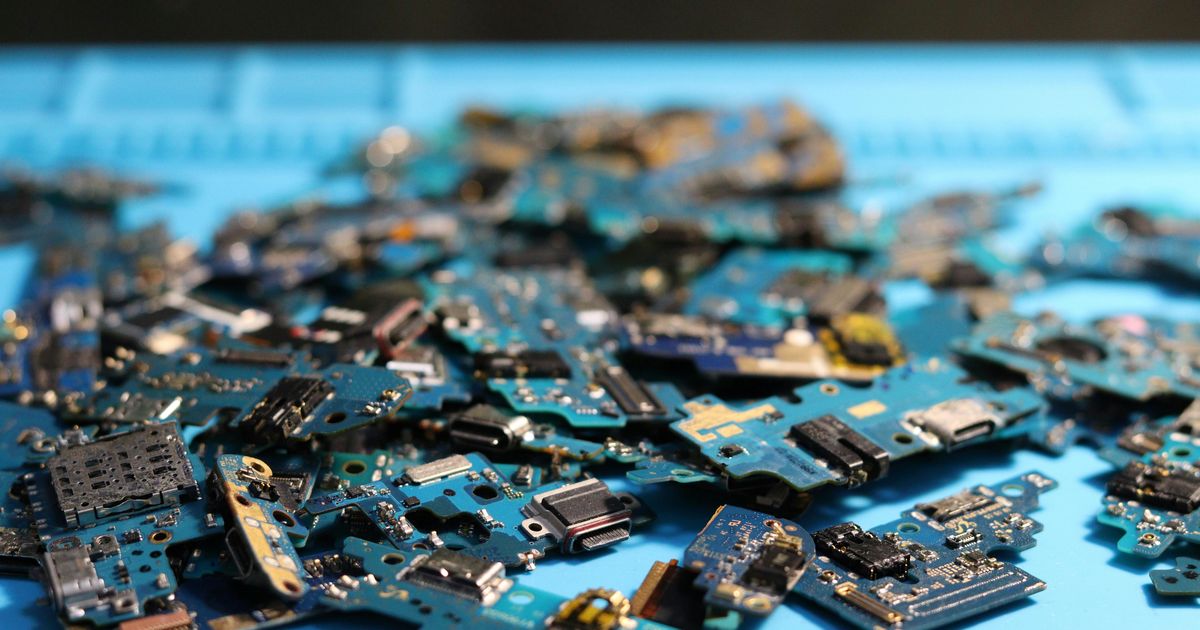
When people think about IT recycling, they picture equipment getting broken down and melted into raw materials. And that does happen — eventually. But for a huge portion of the equipment that comes through our door, recycling isn’t the first stop. Refurbishment is.
Understanding the difference between refurbishment and recycling — and why one is almost always better than the other — is key to making smart decisions about retired IT equipment.
The Waste Hierarchy
Environmental scientists and policymakers have long used a framework called the waste hierarchy to rank disposal options from most to least desirable. From the top:
Reduce — Use less in the first place. Buy what you need, not what you might need.
Reuse — Use it again, as-is or with minimal refurbishment. This is where refurbishment lives.
Recycle — Break it down into raw materials for remanufacturing.
Recovery — Extract energy from waste (incineration, etc.).
Disposal — Landfill. The last resort.
Reuse sits above recycling for a reason. When you refurbish and reuse a server, you preserve all the energy, materials, and labor that went into manufacturing it. When you recycle it, you lose most of that embedded value and start the manufacturing process over for whoever needs a replacement.
Think about what’s actually embedded in a working server: mined and refined metals, fabricated semiconductors, precision assembly, and testing — plus the shipping at every stage. Recycling recovers some of the raw materials, but none of the manufacturing. The Circular Drive Initiative — a consortium including Seagate and major data center operators — estimates that reusing a drive delivers up to 275 times the environmental value of recycling its raw materials. The exact multiple varies by device, but the direction is always the same: a functional device is worth vastly more in use than in pieces.
The Ellen MacArthur Foundation has done extensive work on circular economy principles — the idea that products and materials should stay in use for as long as possible. IT equipment is one of the most natural applications of this thinking, because enterprise hardware is engineered for a much longer service life than its first owner typically uses.
What Refurbishment Actually Looks Like
Responsible refurbishment isn’t just plugging a server back in and calling it good. Professional refurbishment typically involves:
Visual inspection — Checking for physical damage, corrosion, or signs of environmental exposure (water damage, smoke, excessive dust).
Cleaning — Enterprise equipment that’s been running in a data center for three to five years accumulates dust, debris, and sometimes surprises. Everything gets cleaned thoroughly.
Component testing — Servers get powered on and run through diagnostics: memory errors, drive health, BIOS/firmware status, and network connectivity. Individual components get tested separately.
Data sanitization — Any storage media gets sanitized using a process aligned with NIST SP 800-88 Rev. 2 guidance before the equipment moves forward.
Grading and triage — Not everything passes as a whole unit, and that’s fine. A server with a failed motherboard still carries working CPUs, RAM, drives, and power supplies. Component harvesting is the middle rung between whole-unit reuse and raw material recycling — the good parts extend the life of other systems, and only the truly dead material moves to the recycling stream.
At GreenIT, our role is the first and most critical step: picking up retired equipment, handling the data sanitization, and making sure functional equipment goes to refurbishment rather than straight to the shredder. We prioritize reuse over raw material recycling for everything that has remaining useful life.
The Data Question — Because It’s Always the Objection
The most common reason businesses send working equipment straight to destruction isn’t environmental indifference. It’s data fear. “Just shred it” feels safe, so functional hardware gets destroyed as a security blanket.
The two goals do not inherently conflict. Appropriately selected and verified software-based sanitization can protect data while leaving hardware intact for reuse, and GreenIT uses a process aligned with NIST SP 800-88 Rev. 2 guidance. GreenIT-issued service records are available, but they are not third-party certification or government approval. We walk through the tradeoffs in our data sanitization vs. physical destruction analysis. For media that cannot be sanitized or organizations whose written policies mandate destruction, paid drive crushing is available.
Who Buys Refurbished Enterprise Equipment?
More organizations than you might think. There’s strong demand for refurbished enterprise equipment across a wide range of sectors. School districts stretch technology budgets with refurbished desktops and laptops. Nonprofits run entire back offices on hardware that a corporation retired at the three-year mark. Small businesses, labs, and test environments buy servers that no longer meet a large enterprise’s density requirements but will run a workload happily for years.
A server that a large company retires at three years old often has five or more years of useful life remaining in a less demanding environment. That’s real, meaningful extended useful life — and it keeps functional hardware out of the waste stream. There’s a timing dimension here too: resale value decays steadily from the day equipment is decommissioned, which is why acting at refresh time beats letting gear age in a storage room. Our post on server hardware depreciation charts how quickly that window closes.
When Recycling Is the Right Call
Not everything can or should be refurbished. Equipment that’s truly obsolete, physically damaged beyond repair, or so old that there’s no market demand is a legitimate candidate for material recycling. At that point, recycling done right is genuinely valuable: steel, aluminum, copper, and circuit board metals go back into the manufacturing supply chain through domestic downstream processors instead of a landfill — or worse, an overseas dump.
The key is making that determination thoughtfully rather than defaulting to it. Too many organizations — and too many recycling providers — skip the assessment step entirely and send everything straight to the shredder. That’s waste in the most literal sense. The honest test for any provider is simple: ask them what percentage of what they collect gets reused versus shredded, and whether they can walk you through the triage. If everything gets the same treatment, nothing is being assessed.
Why This Is Also Our Business Model
Here’s the part worth being transparent about: refurbishment is the reason our pickup service is free. GreenIT Pickup is funded by refurbishment and materials recovery — the residual value in the equipment covers the cost of collecting it, sanitizing it, and processing it. That alignment matters. A provider funded by reuse has every incentive to find the highest use for your equipment; a provider charging you per pound to shred has every incentive to shred.
It also means we’re a B2B service with minimum pickup quantities — the model works on business-scale loads of servers, laptops and desktops, networking gear, and storage, not single devices from households.
How This Connects to Our Service
When GreenIT Pickup collects your retired IT equipment, we make sure functional equipment goes toward reuse rather than straight to the shredder. We handle the pickup and data sanitization — and we prioritize getting equipment to refurbishment channels over raw material recycling wherever possible. For a step-by-step view of the process, see what happens to your equipment after pickup, or how refurbishment fits into the broader ITAD vs. recycling decision.
This approach benefits everyone. You get your space cleared and your data secured. Equipment that still has life gets a second chance. And the environmental impact is minimized because we’re keeping functional hardware in use instead of turning it into scrap prematurely.
We’re headquartered in Southlake and pick up across the metroplex — Dallas, Fort Worth, Richardson, Plano, and the rest of the DFW service area.
Have equipment that deserves a second life? Schedule a pickup →
Need IT Equipment Picked Up?
GreenIT Pickup provides free onsite pickup for qualifying B2B IT equipment loads across the Dallas-Fort Worth metroplex, so your team does not have to transport equipment to a drop-off.
Related Services
Related Articles
E-Waste by the Numbers: A Business Case
See the security, financial and environmental numbers behind responsible business IT disposal—and why retired equipment needs a documented plan.
SustainabilityEnvironmental Cost of Data Center Upgrades
Data center upgrades generate massive amounts of e-waste. Learn the environmental impact of hardware refresh cycles and how responsible reuse and recycling can help.
SustainabilityNorth Texas Giving Day: Nonprofit Tech Cleanout
Before North Texas Giving Day 2026, DFW nonprofits can inventory, reuse and responsibly clear retired computers, servers and network equipment without a drop-off.