
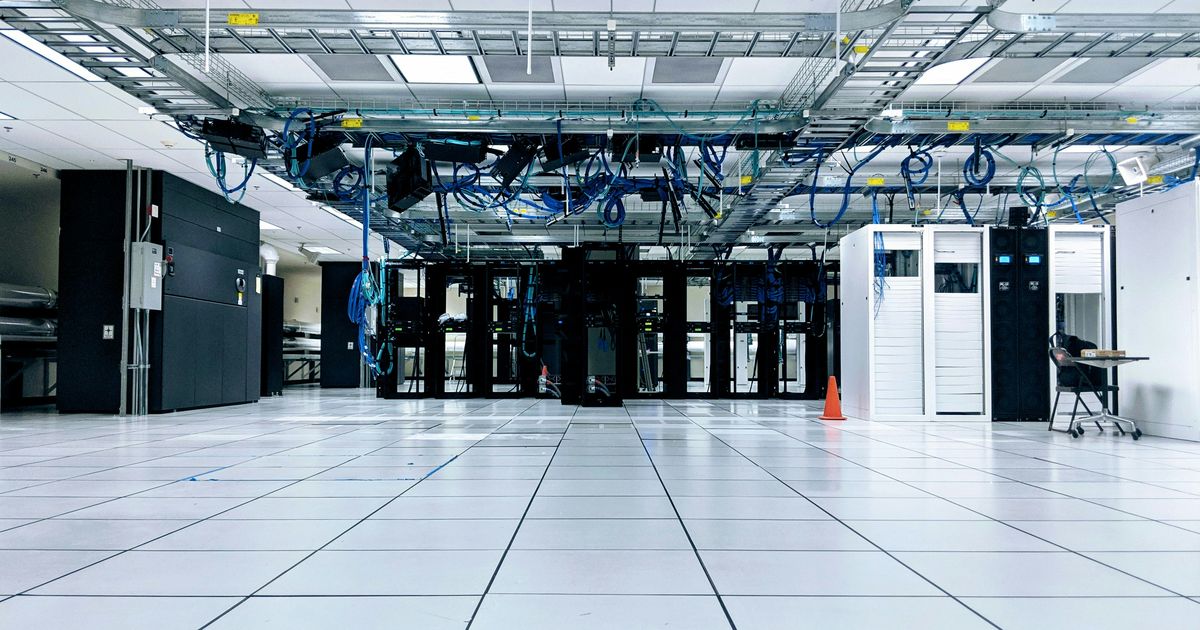
Every three to five years, most data centers go through a hardware refresh. New servers come in. Old servers go out. It’s a routine part of IT operations, driven by performance demands, warranty expirations, power efficiency improvements, and the relentless march of Moore’s Law.
What’s less visible is the environmental cost of that cycle.
The Scale of the Problem
The United Nations’ Global E-waste Monitor tracks worldwide electronic waste generation, and the numbers are staggering. Globally, we generate over 60 million metric tons of e-waste annually — and the number is climbing. IT and telecommunications equipment accounts for a significant portion of that total.
A single enterprise rack server contains pounds of steel, aluminum, copper, rare earth elements, and plastics. Multiply that by the thousands of servers a mid-size data center replaces in a single refresh, and you start to see the scale.
Nowhere is this more relevant than here. Dallas-Fort Worth is one of the largest and fastest-growing data center markets in the country, with new capacity under construction across the metroplex — and every megawatt that comes online eventually rotates hardware out on the same three-to-five-year cycle. The refresh waves that are a rounding error in most regions are a structural feature of the DFW economy. We dug into the local numbers in our state of IT disposal in Dallas-Fort Worth report.
But the environmental cost isn’t just about what gets thrown away. It’s about what it took to build it in the first place.
The Manufacturing Footprint
Building a new server is resource-intensive. Mining the metals, refining the materials, manufacturing the chips, assembling the components, and shipping the final product — each step carries an environmental cost. Studies have shown that for many electronics, the majority of lifetime carbon emissions come from manufacturing, not from years of operational use.
This is the concept of embodied carbon, and it’s worth sitting with, because it inverts how most people think about IT sustainability. The intuition says the environmental cost of a server is the electricity it burns. For modern electronics, the intuition is wrong — the semiconductor fabrication alone is extraordinarily energy- and water-intensive, and it happens before the device ever powers on. By the time a server reaches a rack in Richardson or Fort Worth, most of its lifetime environmental cost has already been paid.
That means the most environmentally impactful thing you can do with a working server isn’t to recycle it. It’s to keep it running. Or if you can’t use it, to make sure someone else can.
The Refresh Paradox
Here’s the uncomfortable wrinkle: hardware refreshes are often justified on environmental grounds. New servers deliver more compute per watt, so replacing old gear reduces operational energy use. That’s true as far as it goes.
But if the displaced server gets shredded, the refresh also spends a full manufacturing footprint — the embodied carbon of the new machine — while destroying the embodied carbon already invested in the old one. Whether the refresh nets out green depends heavily on what happens to the outgoing equipment. A refresh where the old servers go on to run five more years somewhere else is a very different environmental transaction than one where they go into a shredder. The refresh decision and the disposition decision are two halves of the same math, and most organizations only do the first half.
What Happens When Refresh Cycles Go Wrong
In the worst case, retired data center equipment ends up exported to developing countries where it’s processed by hand in unsafe conditions. Circuit boards get burned in open pits to recover trace metals. Heavy metals leach into soil and water. Workers — often including children — are exposed to toxic fumes.
The Basel Action Network has spent years documenting this problem through GPS tracking studies, showing that equipment given to some “recyclers” ends up in exactly these situations. The lesson from those studies isn’t just that bad actors exist — it’s that you can’t tell from the loading dock. The truck looks the same either way. The only defense is asking your provider direct questions: Where does material physically go? Is processing domestic? What percentage is reused versus shredded? A provider doing this right can answer without flinching.
Even domestically, equipment that goes straight to material recycling — shredded for raw material recovery — represents a missed opportunity. If that server still works, shredding it means someone somewhere is manufacturing a new one to meet the demand the old one could have fulfilled.
The Reuse Opportunity
This is where responsible IT asset disposition makes a real difference. Enterprise equipment that’s being retired by one organization is often perfectly viable for another. A three-year-old server that no longer meets a hyperscaler’s performance requirements might be ideal for a small business, a research lab, or a homelab enthusiast.
By testing, refurbishing, and reselling equipment instead of immediately recycling it, we extend the useful life of hardware that already exists. That directly offsets the need for new manufacturing and all its associated environmental costs. This reuse-first approach is the heart of the waste hierarchy — we laid out the full case in refurbishment vs. recycling — and it has a practical business bonus: recently retired enterprise gear still carries real resale value, as our post on server hardware depreciation shows. Reuse isn’t just the green option; it’s the one that recovers money.
The Data Objection
If reuse is so clearly better, why does so much working equipment get destroyed? In our experience, one reason dominates: data fear. Shredding feels safe, so it becomes the default — and the environmental cost is treated as the price of security.
It does not have to be a trade-off. Media-appropriate sanitization can protect data while preserving equipment for reuse, and GreenIT uses a process aligned with NIST SP 800-88 Rev. 2 guidance. GreenIT-issued service records are available to describe the process performed. Our data sanitization vs. physical destruction analysis covers the decision factors in depth. Destruction still has a legitimate role for media that cannot be sanitized and for specific written mandates, but applying it indiscriminately can create avoidable environmental cost.
What Businesses Can Do
If you’re planning a hardware refresh, the disposition plan belongs in the project plan from day one — not as an afterthought when the old racks are already blocking a hallway:
Think about disposition before you purchase. Build decommissioning into the refresh timeline, and schedule removal for when the new gear goes live so nothing accumulates.
Work with a provider that prioritizes reuse over raw recycling. Ask what percentage of collected equipment gets a second life.
Ask where your equipment actually ends up. Domestic processing, downstream partners, and documentation — chain-of-custody records and GreenIT-issued certificates of data sanitization — should all be available.
Don’t forget the edge cases. Colocation exits have their own logistics — remote hands, cage access, cabling — which is why we run a dedicated colocation decommissioning service. And data center operators refreshing at scale should plan disposition in waves, not as a single end-of-project scramble.
And if you’re in the Dallas-Fort Worth area, we’re happy to make this easy. GreenIT Pickup is headquartered in Southlake and picks up retired equipment for free across the metroplex — Dallas, Fort Worth, Richardson, Plano, and beyond. The pickup is free because it’s funded by refurbishment and materials recovery: we sanitize the data, put anything viable back into productive use, and responsibly recycle the rest.
It’s a small step in the context of a global problem, but it’s a meaningful one — and it starts with how individual organizations handle their own hardware lifecycle.
Planning a hardware refresh? Schedule a pickup and give your old equipment a second life →
Need IT Equipment Picked Up?
GreenIT Pickup provides free onsite pickup for qualifying B2B IT equipment loads across the Dallas-Fort Worth metroplex, so your team does not have to transport equipment to a drop-off.
Related Services
Related Articles
E-Waste by the Numbers: A Business Case
See the security, financial and environmental numbers behind responsible business IT disposal—and why retired equipment needs a documented plan.
SustainabilityNorth Texas Giving Day: Nonprofit Tech Cleanout
Before North Texas Giving Day 2026, DFW nonprofits can inventory, reuse and responsibly clear retired computers, servers and network equipment without a drop-off.
SustainabilityRefurbishment vs. Recycling: IT Reuse
Recycling isn't always the best option for old IT equipment. Learn why refurbishment and reuse are the top of the waste hierarchy and how they give hardware a valuable second life.